Chicago’s Forgotten Funeral Trains
In the 19th century, as Chicago grew rapidly into a major American city, the need for new cemeteries arose far from the bustling urban center. City ordinances prohibited burials within city limits to protect public health and preserve space, so large cemeteries were established on the outskirts, at places like Rosehill Cemetery, Calvary Cemetery, and southern sites such as Mount Greenwood, Mount Olivet, and Mount Hope.
Traveling to these distant locations presented significant challenges. Roads were often unpaved and became muddy or impassable during rain or snow, making journeys by horse-drawn hearses difficult and unreliable. To address this, railroads stepped in with a practical and dignified solution: dedicated funeral trains. These special services transported both the deceased and groups of mourners directly to the cemeteries, offering a reliable alternative that reflected the era’s innovative use of rail technology.
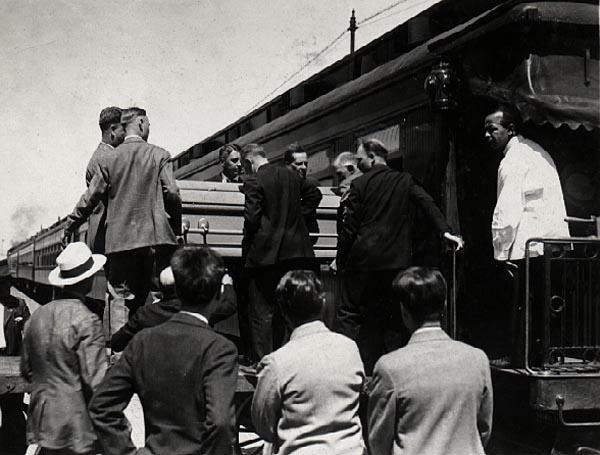
Funeral trains operated on established railroad lines and, in some cases, on the city’s emerging elevated “L” system. Major railroads also ran daily scheduled departures from downtown stations. A typical funeral train included a specially designed car for the casket and passenger cars for family and friends. Some routes featured spur tracks that extended right into cemetery grounds, allowing the train to arrive seamlessly at a station or platform near the burial site. The casket traveled one way, and mourners received round-trip tickets at reduced rates. This system made funerals more accessible, especially for larger groups, and turned what might have been a grueling trip into a structured, communal experience.
The funeral train era also intersected with notable historical moments. In 1865, Abraham Lincoln’s funeral train passed through Chicago as part of its national journey, drawing immense crowds and highlighting the emotional power of rail in public mourning. Locally, these services continued for decades, with the “L” system’s Metropolitan Division operating funeral cars up until 1934. By then, automobiles and improved roads had made private hearses and motor processions more practical and preferred.
As motorized transportation became widespread in the 1920s and 1930s, demand for rail funeral services declined, and the practice gradually faded. Today, remnants of this history remain in old photographs, abandoned spurs near cemeteries, and accounts preserved in local archives. Chicago’s funeral trains illustrate how communities adapted and innovated, ensuring that families could gather with dignity regardless of distance or weather. At Midtown Funeral Home and Cremation Options, we carry that same spirit and commitment to thoughtful, accessible service. The same underlying goal endures: to honor the deceased and support those who grieve in reliable ways that are respectful and meaningful.